Not for lack of effort. But for a task too large.
Mourning
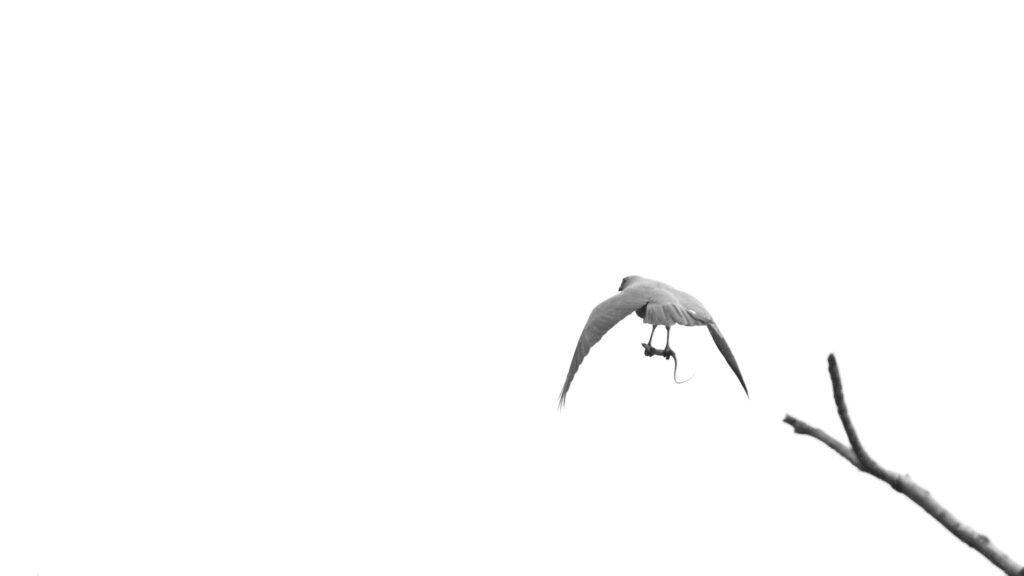
The Strait did not begin with grace. It began with violence.
Long before the strait had a name, before the islands of Vanua Levu and Taveuni knew the boundaries of their own shores, the earth tore itself open beneath the Pacific plate. A jagged volcanic mass thrust upward into the sun, severing the sea in two.
There was no sky to witness – only the crushing blind weight of the abyssal depth. Basalt fractured under incandescent heat, threw up mountain ranges of molten rock that hissed and hardened into black stone. The seabed buckled, rose, and split down its spine.
For centuries, the raw black basalt stood stark and lifeless against the horizon—a space formed of pure, unyielding violence.
Then came the tides.
Driven by the distant pull of the moon, the tides found weakness in the stone. Over time they carved narrow gaps through the rock.
The water did not trickle; it surged. Millions of tons of deep-sea brine compressed into a narrow corridor, turned into a roaring, invisible engine. The currents scoured the submerged canyon walls clean, ripping away loose rubble and dragging cold, nutrient-rich upwellings from the dark depths into the light.
The Strait was a realm of brutal kinetic force. Nothing fragile should have lived there.
Yet, into this rushing torrent drifted microscopic life—coral polyps, tiny as dust, borne on the surge. Where the current hit the basalt pinnacles, soft corals threw out transparent anchors, gripping the jagged volcanic rock. They did not fight the violence of the tide; they opened themselves to it. Every restless wave brought a feast of plankton. The current that should have torn them apart became the breath that fed them. Over generations, the black canyon sprouted into pulsating, vivid life—forests of crimson, yellow, and violet fanning out into the dark blue, converting the sheer rage of the ocean into a reef of light, attracting small reef fish, which in turn drew apex predators, sea turtles, and pelagic species—turning a bare underwater channel into a bustling marine metropolis.
Yet its undoing will bear none of that ancient drama. There will be no explosive catastrophe, no great tearing of the seabed, no warning alarm across the surface. Its end is coming instead as a silent, invisible tide: a fraction of a degree in warm, stagnant calm, a cloud of drifted soil settling without a sound, and a slow, unremembered breath fading out in the blue.
For now the engine is losing headway. Its self-repairing system has adapted to handle natural disturbances like tropical cyclones or localized thermal spikes but has no memory for this kind of violence—the slow, quiet heat that settles without a wave; the heavy, silent silt that smothers the polyps in the dark; the invisible shift in water chemistry that turns nourishment into poison. The reef has no defence against the calm, suffocating hand of man.
The engine doesn’t fail because it stopped functioning; it fails because the environmental burden shifted faster than evolutionary adaptation could move.
Can we mourn what we never truly knew?
In human grief, we mourn a face, a voice, a place we walked through, a specific season we remember. The pain comes from the sharp contrast between the presence we knew and the absence left behind. But mourning a degraded reef or an altered strait is an entirely different weight:
We look at the Somosomo Strait today and see something breathtaking—unaware that to a diver or fisherman fifty years ago, this current state might already look sparse and quiet. We mourn a shadow, unaware of the light that cast it.
The reef is a complex, millions-of-years-old conversation between tide, light, polyp, and pelagic traveler. We never fully understood how the parts spoke to one another, so we mourn the mystery itself.
Perhaps the deepest sorrow comes when we realize our distance was never deliberate. We simply looked elsewhere for so long that we forgot there was anything here asking to be seen.
Can then, can we mourn what we never truly knew?
We might have to.
Because mourning is often a first act of attention.
We begin to see the dignity of resilience.
Not for lack of effort.
But for a task too large.